ABOUT ME
Hello.
This is dataarena tehc this site information and technology purpose

Here
You can see the gadgets price specification and tips and tricks
A WordPress.com site.

Advantages of Electronics Gadgets
1 – Communication
Electronic gadgets have made communication easier and more accessible than ever before. With the advent of smartphones and social media, we can stay connected with our friends and family, no matter where they are in the world.
Smartwatches have taken this a step further by allowing us to receive calls, text messages, and notifications directly on our wrists, without having to pull out our phones.
2 – Convenience
Electronic gadgets have made our lives more convenient in many ways. For example, we can now shop online, pay bills, and book appointments from the comfort of our own homes, thanks to laptops and smartphones.
Smartwatches have added to this convenience by allowing us to track our fitness goals, control smart home devices, and even make payments, all from our wrists.
3 – Productivity
Electronic gadgets have also increased our productivity by making it easier to work on the go. Laptops and tablets have made it possible to work remotely, while smartphones have enabled us to stay connected with our colleagues and clients while on the move.Smartwatches have added to this productivity by allowing us to check our emails and messages, manage our schedules, and even make voice notes, all without having to take out our phones or laptops.
4 – Entertainment
Electronic gadgets have also provided us with endless entertainment options. From streaming movies and TV shows on our smartphones and laptops to playing games on our tablets, these gadgets have made it possible for us to access entertainment whenever and wherever we want.Smartwatches have also added to this entertainment by allowing us to listen to music and podcasts, and even watch short videos, all from our wrists.
Smartwatches have also added to this entertainment by allowing us to listen to music and podcasts, and even watch short videos, all from our wrists.
Smartwatches have also added to this entertainment by allowing us to listen to music and podcasts, and even watch short videos, all from our wrists.
5 – Health and Fitness
Electronic gadgets have also played a significant role in improving our health and fitness. Smartphones and fitness trackers have made it easier for us to track our physical activity and monitor our health.
Smartwatches have taken this a step further by allowing us to track our heart rate, calories burned, and even monitor our sleep, all from our wrists.
6 – Safety and Security
Electronic gadgets have also helped to increase our safety and security. For example, smartphones and home assistants can be used to call for help in case of an emergency, while smart home devices can be used to monitor our homes and alert us in case of any security breaches.Smartwatches have added to this safety and security by allowing us to receive real-time alerts and notifications, and even make emergency calls, all without having to take out our phones.
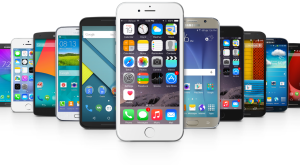
A phone, whether it’s a traditional landline phone or a modern smartphone, operates on the principles of telecommunication, which involves transmitting and receiving signals to facilitate voice communication, data transfer, and various other functions. Here’s a simplified overview of how a phone works:
1. Capturing Sound: When you speak into a phone’s microphone, sound waves are converted into electrical signals. The microphone converts sound waves into analog electrical signals, which represent the variations in air pressure caused by your voice.
2. Analog-to-Digital Conversion: In modern digital phones, these analog signals are converted into digital data. This process, known as analog-to-digital conversion, involves sampling the analog signal at regular intervals and assigning numerical values to represent the amplitude of the signal at each sample point.
3. Data Compression (Optional): In some cases, especially for data transfer over networks, the digital data may undergo compression to reduce the amount of data that needs to be transmitted. This helps in conserving bandwidth and speeding up data transfer.
4. Transmission: The digital data is then transmitted through the phone’s transmitter, which converts it into electromagnetic waves. In the case of landline phones, these electromagnetic waves travel through physical wires (copper wires or fiber-optic cables) to reach the destination. For mobile phones, the waves are transmitted wirelessly via radio waves to nearby cell towers.
5. Reception: At the receiving end, the electromagnetic waves are captured by the phone’s receiver, which converts them back into electrical signals.
6. Digital-to-Analog Conversion: If necessary, the received digital data is converted back into analog signals. This step is essential for converting the data into sound waves that can be heard through the phone’s speaker.
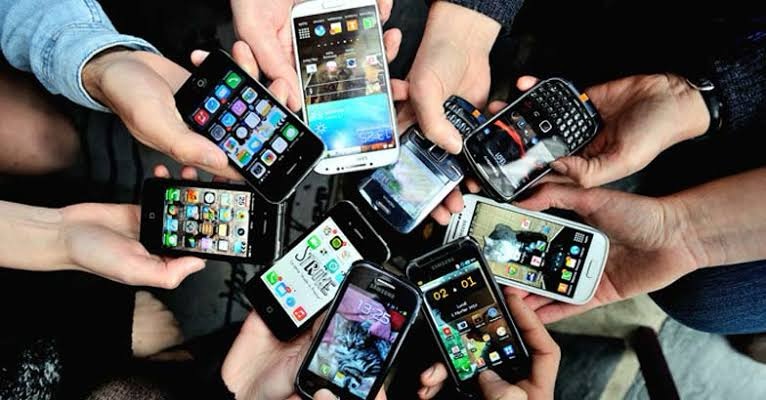
12 things to consider while buying mobile phone
1. Build quality
Body of smartphones are made of metal or plastic. Though there are glass-coated panels, they are not very popular. Durability of your smartphone hugely depends on its build quality. A metal-bodied smartphone is more likely to withstand drops from two to three feet. Survival of a plastic bodied phone is limited. At the same time, you cannot expect glass-coated panels to survive any drop. So give due weightage to it.
2. Size and resolution of display
You should pick the size and resolution of your display depending on your usage. If you love watching videos and stream a lot of them on your device, then a screen of either 5.5 or 6.0 full-HD or QHD would be ideal for you. They give you clearer and sharper pictures. Bigger phones are bulky and you will find it difficult to carry them around. So a device with over 6.0 inch screen is not ideal. A five-inch HD or full-HD screen would fit the needs like checking emails, chats and other similar ones.
Then comes the types of display. There are mainly two types of display – IPS display and LED display. Handset major Samsung is a great advocate of Super AMOLED display. Similarly, iPhones and other devices of Apple boast of IPS displays. Both the displays have advantages and disadvantages. Hence, it is not easy to judge which is better.
3. Processor
Performance of your smartphone hugely depends on the processor. Similarly, the performance of the processor depends on factors like Operating System, User Interface, bloatwares and more. Choose the processor on the basis of your requirement. A stronger Qualcomm Snapdragon (652/820/821) processor is required for editing images and videos online as well as for playing games. They are also good when streaming videos online or multitasking (using multiple apps at a single time). On the other end, MediaTek processors are good enough for light use.
4. Camera
Most people hold a wrong consumption that megapixels are the sole determinants of good photos. Megapixels stand for size of images and as pixels go high, the images get sharper on small screens. Apart from megapixels, other features like camera aperture, ISO levels, autofocus, etc., do play key roles in creating clear pictures. Any camera with 13 MP or above with f/2.0 or lower aperture will be good for photography enthusiasts while an 8 MP camera with f/2.2 aperture will be sufficient for casual use.
5. Battery
Battery life directly depends on the use. A 3500 mAh battery would be ideal for those watching videos, playing games and working on mobile apps. Similarly, a battery of 3000 mAh will be sufficient for mild use or light use.
6. User Interface and OS
Give due weightage on user interface and operating system. These days, we do nearly-everything through mobile and hence, the interface should be simple and user-friendly. Motorola handsets, Google’s Nexus and Pixel smartphones, Android One, etc., are some of those smartphones, which give pure Android experience. Various handset makers depend on other user interfaces like EMUI, ZenUI, Samsung TouchWiz, and Xperia UI to offer well-designed features to sort applications.
7. Storage
Pick a phone that supports sufficient storage. Remember you won’t get as much storage as the figure states like 16GB\32 GB\64GB etc. Part of these storage is consumed by the pre-installed apps and you get only the remaining part of storage. So choose a device depending on your use and the number of apps. If you are picking a phone with low internal storage then make sure that it supports microSD card for expanding the storage.
8. Security features
It’s always good to go for a phone that comes with additional security features like finger print scanner or iris scanner. These can be used not only to lock/unlock your phones but also to protect your valuable files and documents on the phone.
9. Audio/Speakers
These days, everyone uses their phones to watch videos and movies, listen to music, and more. Prefer phones with front-facing speakers for gaining voice clarity even when using the phones on landscape mode. Also check the quality of speakers and audio system before buying.
10. Headphone Jack/USB port
Phones comes with either micro-USB or USB Type-C. Devices, which support USB Type-C is more futuristic. Check the availability of 3.5 mm audio jack or USB Type-C based headphone jacks. Some handset makers have started ditching 3.5 mm audio jack in their devices.
11. Add-ons
Check the additional apps, which you get as pre-installed apps. Some devices come with lots of pre-installed apps while some come with very little. Check whether these apps are boon or bane.
12. Price
Make sure you have chosen a phone that fits your pocket and budget. Phone should be chosen depending on the requirement. Consider whether you really need a premium phone to do all your needs. If not, prefer a mid-range or budget smartphones that won’t burn a hole in your pocket.
 Data arena tech